 Culture
 At six in the morning the thousand gates of Fushimi Inari belong to crows, shopkeepers and the occasional fox — stone ones, guarding the trail with keys and scrolls in their mouths. By ten the same path belongs to everyone. Go early.
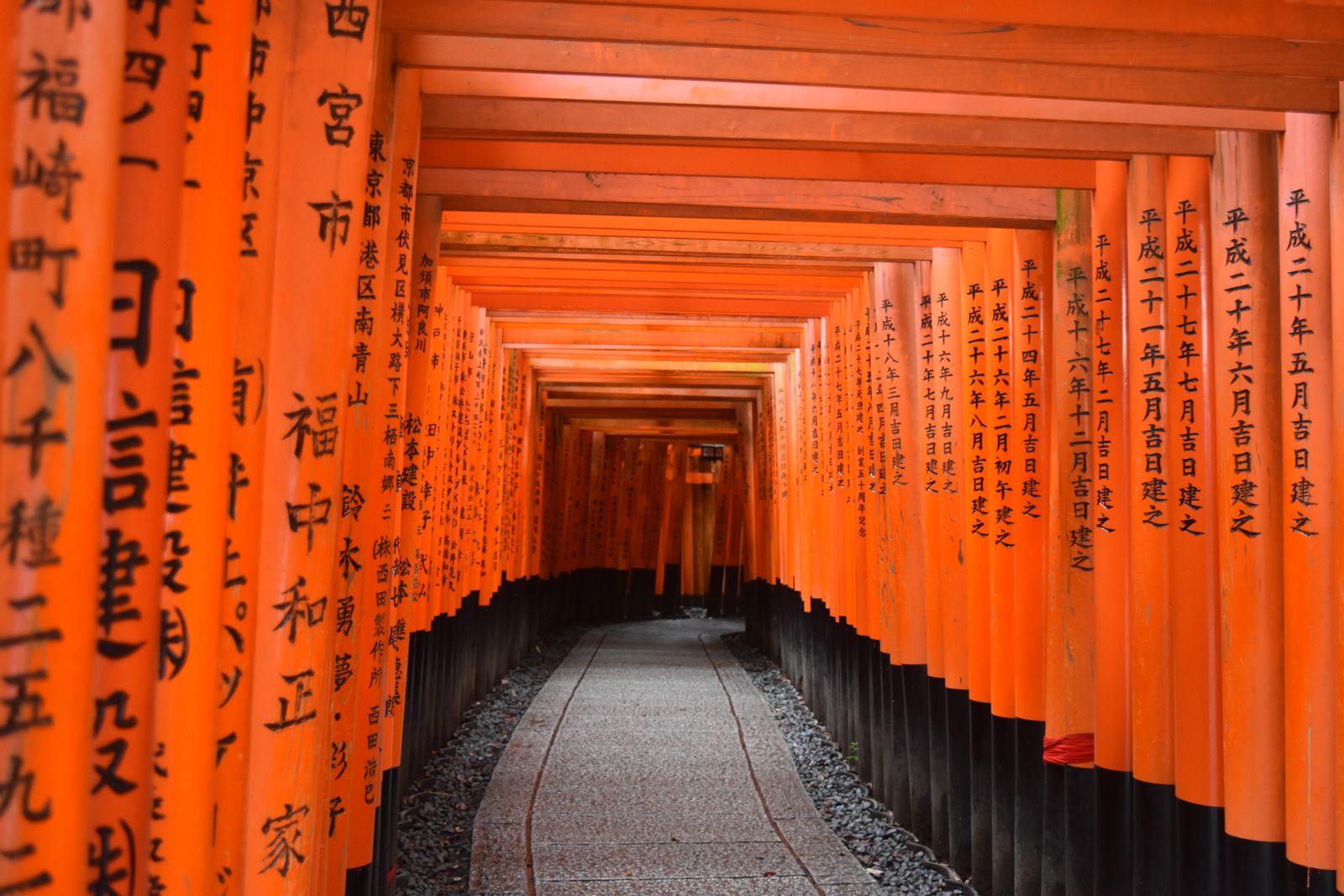
Each vermilion torii was donated by a business praying for prosperity, its name and date brushed in black on the inner pillar. Walking the mountain is literally walking through centuries of wishes, stacked gate by gate for four kilometres up Mount Inari.
Who the foxes are
The foxes — kitsune — are messengers of Inari, patron of rice, business and safe travel. You will find them everywhere: flanking the main hall, miniaturised on altars, printed on the votive plaques visitors hang by the hundred. They hold keys to the rice granary, scrolls of wisdom, or nothing at all, which the priests say means the message is still being written.
Bow once before passing under the first gate and once after the last. It costs four seconds and marks you as a guest, not a backdrop.
Walking it well
- Take the left fork upward, the right fork down — the one-way flow keeps the narrow sections civil.
- Stop at the Yotsutsuji viewpoint — halfway up, Kyoto spreads out below and most crowds turn back.
- Eat inari sushi at the base — sweet fried tofu pouches named for the foxes' favourite food. The legend says so; the taste confirms it.
The full loop takes about two hours if you dawdle properly. Buy a miniature gate from a hillside stall, write something honest on the back, and leave it where the morning light finds it. Wishes, like trails, work best when you walk them all the way up.

WRITTEN BY
Food & culture writer
Daniel cooked in mountain refuges for six years before trading the pass for a notebook. He writes about fire, markets and the meals that anchor a journey.